Non-Surgical Relief for Chronic Pain and Soft Tissue Injuries, available in Colorado Springs and Nearby Areas!
Shockwave Therapy in Colorado Springs
Are you experiencing persistent sports-related pain and looking for shockwave therapy in Colorado Springs? If so, you are in the right place. At Thrive Health Systems, you will get an individualized shockwave therapy plan to manage your persistent pain and support tissue recovery.
Prolonged pain can affect mobility, exercise, work, and daily activities. In cases where pain does not respond to appropriate conservative treatment, extracorporeal shockwave therapy (ESWT) may also be an alternative to discuss.
Thrive Health Systems provides shockwave therapy along with other chiropractic services in Colorado Springs at their facilities. An assessment can give more information about whether this therapy is right for you.
What Is Shockwave Therapy?
Extracorporeal shockwave therapy (ESWT) is a non-invasive treatment that delivers acoustic energy through the skin to targeted tissues, such as tendons, muscles, ligaments, and fascia.
Extracorporeal literally means “outside the body.” A medical practitioner delivers the treatment externally using a hand-held device that sends focused acoustic energy to the treated site without making an incision or inserting instruments into the tissues.
This treatment differs from electrical stimulation, which uses electrical impulses to stimulate nerves and muscles; it uses mechanical energy instead. Unlike therapeutic ultrasound, which uses high-frequency sound waves and can produce thermal or non-thermal effects depending on the treatment settings, shockwave therapy delivers acoustic energy through mechanical pressure waves.
Focused shockwave therapy and radial pressure wave therapy are two different forms of acoustic wave treatment. Focused shockwaves concentrate energy at a selected depth within the tissues, whereas radial pressure waves disperse energy outward from the applicator, with the highest pressure generally occurring near the applicator surface. The treatment modality used depends on the device and clinical approach.
Purpose of Shockwave Therapy
The purpose of shockwave therapy is to stimulate biological responses in selected tissues and potentially support recovery, particularly in some persistent tendon and fascia conditions.
Depending on the particular pathology and the procedure, medical shockwave therapy can be helpful for:
- Enhancing local blood flow and tissue activity.
- Stimulating cellular reactions involved in tissue repair.
- Affecting pain processing mechanisms.
- Helping in recovery in some cases of chronic tendinopathy and myofascial pathologies.
- Potentially reducing symptoms associated with selected calcific tendinopathies.
It should be noted that shockwave therapy is not capable of breaking all forms of scar tissue and restoring all forms of damage.
How It Works
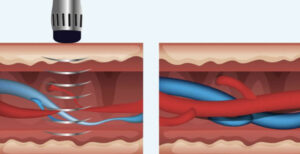
Shockwave therapy delivers mechanical energy to a specific region using a handheld device.
When sound waves penetrate target tissues, they create mechanical effects. This mechanical stimulation may affect various biological functions, including mechanotransduction, angiogenesis (growth of new blood vessels), cellular activity, and tissue remodeling.
These biological responses may support tissue function and help manage symptoms associated with certain musculoskeletal conditions. The three proposed mechanisms below help explain how the treatment may work.
- Mechanotransduction: The mechanical stimulation can trigger certain cellular signal transduction pathways, which can affect tissue maintenance and repair.
- Changes in circulation: The shockwave stimulation can stimulate local blood vessels, which may lead to improved oxygen and nutrient supply to the treated area.
- Pain modulation: The mechanical stimulation can affect the functioning of sensory nerves and modulate pain pathways, thereby alleviating pain in some patients.
The use of shockwave therapy for pain relief in properly selected patients who do not respond to traditional conservative treatment can be considered an option. Shockwave therapy for chronic pain relief can become a part of the treatment, especially in cases of chronic tendon or fascia problems.
What Conditions May Be Suitable for Shockwave Therapy?
Indications for shockwave therapy vary depending on the type of tissue involved, how long symptoms have lasted, the severity of the problem, and any available research evidence.
Shockwave therapy may be appropriate for carefully selected chronic tendon and fascia problems. It could also be used in carefully selected cases of calcified tendon problems and other musculoskeletal conditions.
Common Musculoskeletal Conditions
Conditions that could be considered for shockwave treatment include:
- Chronic plantar fasciopathy (plantar fasciitis)
- Tennis elbow (lateral epicondylitis)
- Golfers’ elbow (medial epicondylitis)
- Selected rotator cuff calcific tendinopathy
- Patellar tendinopathy (jumper’s knee)
- Achilles tendinopathy
- Greater trochanteric pain syndrome and selected gluteal tendinopathies
- Some cases of chronic tendinopathies and fascias
Shockwave therapy may also be considered for selected cases of proximal hamstring tendinopathy and other chronic tendon conditions.
Pain in a particular area does not automatically mean shockwave therapy is appropriate. For example, shoulder pain can originate from a tendon, joint, labrum, nerve, or the cervical spine. Shockwave therapy may be considered for selected tendon-related shoulder conditions, particularly calcific rotator cuff tendinopathy, while other causes may require different treatment approaches.
Shockwave Therapy for Shoulder Pain and Calcific Tendinopathy
Chronic shoulder pain may affect your ability to dress, move overhead, sleep comfortably, and participate in recreational activities. This problem may be due to rotator cuff tendinopathy, which involves the tendons that allow shoulder movement.
However, shock wave therapy can’t effectively treat all cases of rotator cuff problems.
Calcific Rotator Cuff Tendinopathy
Calcific tendinopathy involves calcium deposition within the tendon and is common in the rotator cuff. Calcium deposition may cause pain, stiffness, and difficulty with overhead movements.
For some individuals, the use of shock wave therapy for calcium deposits may help relieve pain and affect the size of the calcification.
Clinicians can choose ESWT shockwave therapy in Colorado Springs for rotator cuff tendinopathy with calcification, but not specifically for pain and disability relief in noncalcific rotator cuff tendinopathy.
It is important to note that treatment depends on the specific diagnosis, not on the localization of pain.
Other Causes of Shoulder Pain
Other causes of shoulder pain include:
- Rotator cuff tendinopathy (noncalcific)
- Adhesive capsulitis (frozen shoulder)
- Shoulder instability
- Injuries to the labrum
- Arthritis
- Irritation of cervical nerves
Shockwave therapy for adhesive capsulitis is not the primary treatment method for frozen shoulder. Similarly, a labral injury affects the shoulder joint’s labrum, which is the cartilage structure that helps stabilize the joint. It is different from a tendon disorder and requires appropriate assessment.
If you are looking for shoulder shockwave therapy in Colorado Springs, you should first determine what is causing the pain.
Shockwave Therapy for Elbow and Tendon Conditions
Elbow tendinopathies are common in people who repeatedly grasp, lift, throw, or move their wrists. Shockwave therapy can be used in sports injury treatment cases where there is chronic pain in the tendons, based on diagnosis and symptom duration.
Two conditions that might be treated with shockwave therapy are tennis elbow and golfer’s elbow.
Tennis Elbow
Tennis elbow, also called lateral elbow tendinopathy or lateral epicondylitis, is a tendon disorder involving the wrist extensor tendons attached to the outer side of the elbow. Tennis elbow often causes pain with activities such as gripping, lifting, carrying, and wrist extension against resistance.
If left untreated, tennis elbow caused by repetitive strain may progress to chronic pain. Shockwave therapy for tennis elbow in Colorado Springs may be recommended if you have chronic pain. Shockwave therapy for lateral epicondylitis delivers acoustic energy to the affected tendon and may help manage persistent symptoms in appropriately selected patients.
Golfer’s Elbow
Medial epicondylitis (golfer’s elbow) involves the tendons that lie on the inner side of your elbow. Possible signs include localized tenderness, pain with gripping, and pain with resisted wrist flexion and pronation.
Shockwave therapy may be considered for selected cases of persistent golfer’s elbow following an appropriate clinical assessment.
Tendinopathy versus Tendon Rupture
You must know the difference between chronic tendinopathy and a major tendon tear or rupture.
In tendinopathy, the tendon has structural and functional abnormalities, usually from excessive loading and poor tissue adaptation. In a major tendon tear or rupture, structural damage may require imaging or a surgical consult.
While shockwave therapy for tendonitis in Colorado Springs may be indicated in certain chronic tendon problems, it should not be offered as a substitute for proper management of tendon injuries.
Shockwave Therapy for Heel Pain and Foot Conditions
Heel pain is one of the most frequent conditions for which you can get shockwave therapy for heel pain, especially when heel pain is not relieved by conservative therapy.
Plantar fasciopathy, traditionally called plantar fasciitis, affects the thick connective tissue band along the bottom of the foot. It commonly causes pain around the heel, particularly during the first steps in the morning or after prolonged sitting.
Shockwave Therapy for Plantar Fasciitis
Persistent plantar fasciopathy can cause discomfort while walking, standing, exercising, or playing sports. Shockwave therapy for feet can be used when pain does not subside despite proper conservative treatment.
Heel Spurs and Plantar Fasciopathy
A heel spur refers to a bone projection that develops around the insertion of the plantar fascia. It can coexist with plantar fasciopathy without causing heel pain.
In effect, shockwave therapy for heel spurs does not remove the bony protrusion. Instead, the aim is to manage the associated soft tissue pathology.
Understanding the benefits of shockwave therapy for feet also requires recognizing that it aims to ameliorate symptoms rather than correct every structural change.
Other Foot and Ankle Problems
Shockwave therapy may be considered for selected chronic tendon conditions around the ankle, including certain cases of Achilles tendinopathy, depending on the diagnosis and available clinical evidence.
Conditions like Morton’s neuroma, bunions, tarsal coalition, Haglund’s deformity, and open wounds on the foot have other causes that cannot be managed through shockwave therapy alone.
If you are looking for shockwave therapy for feet in Colorado Springs, an evaluation at Thrive Health Systems can help determine whether your symptoms stem from your plantar fascia, Achilles tendon, other tendons, joints, or nerves.
Shockwave Therapy for Hip, Gluteal, and Knee Tendinopathy
The hip and knee joints rely on several muscles and tendons to maintain stability and support everyday movements, including walking, running, and climbing stairs.
Shockwave therapy can treat some chronic tendon injuries in these joints.
Hip and Gluteal Tendinopathy
Gluteal tendinopathy involves the tendons of the gluteal muscles near the greater trochanter of the femur.
Some of the common symptoms include:
- Pain on the outside of the hip
- Pain when lying on the affected side
- Pain during stair climbing
- Difficulty in walking for long distances
- Pain when standing on one leg
GTPS, or greater trochanteric pain syndrome, is a broad term that may include gluteal tendinopathy and irritation of the surrounding structures.
In some cases, shockwave therapy for gluteal tendinopathy may help relieve chronic tendon pain, along with progressive strengthening and proper loading of the area. On the other hand, shockwave therapy for hip bursitis can also work well in specific cases.
However, bursitis, tendon degeneration, hip osteoarthritis, and labral injuries are different conditions altogether.
Knee Tendinopathy and Chronic Knee Pain
Patellar tendinopathy, also known as jumper’s knee, involves the tendon that connects the kneecap to the shin bone. It commonly affects people who do activities involving repetitive jumping, running, and acceleration and deceleration.
Common symptoms include localized pain under the kneecap when you jump, squat, run, or walk up stairs.
If you are suffering from ongoing symptoms, you might consider shockwave therapy for patellar tendonitis. It can help relieve chronic pain in a tendon where conservative treatment has not brought about enough results.
If you have chronic pain, you can also seek the treatment of shockwave therapy for knee pain in Colorado Springs following a clinical evaluation. However, shockwave therapy isn’t the right treatment for every type of knee pain.
What Happens During a Shockwave Therapy Appointment?
Your appointment begins with an initial consultation and assessment to determine whether shockwave therapy is appropriate for your condition. The process generally includes the following steps:
- Initial Consultation: The provider reviews your symptoms, medical history, previous treatments, the location of your pain, and any limitations affecting your daily activities. The physical assessment involves palpation, joint movement, muscle strength, and tendon load tests.
- Treatment Planning: After that, the therapist determines the area to be treated, the shock wave machine, the intensity of the energy, and the number of treatments.
- Treatment Delivery: A coupling gel is applied to the treatment area before the therapist uses a handheld applicator to deliver controlled acoustic waves. You may feel tapping, pressure, or temporary discomfort during the procedure.
- Post-Treatment Education: You may also receive guidance on activity modification, appropriate exercises, and rehabilitation to support your recovery.
The chiropractor for shockwave therapy in Colorado Springs may use chiropractic shockwave therapy in Colorado Springs as part of the overall rehabilitation plan.
How Long Does Shockwave Therapy Take, and How Many Sessions Are Needed?
One common question is: How long does shockwave therapy take? A typical shockwave therapy session at Thrive Health Systems takes about 10 minutes, though the overall appointment may take longer when you include consultation, assessment, and treatment planning.
How Many Sessions Do You Need?
Do you want to know how many shockwave therapy sessions you need? We suggest that 3-12 treatments may be needed depending on the severity of your symptoms. However, this is just a range, since some patients need a few sessions while others with more complicated situations may need more.
How Often Is It Possible To Undergo Shockwave Therapy?
The frequency of shockwave therapy application depends on the particular medical condition. In some cases, the time between the shockwave therapy sessions is up to 1-2 weeks. Thus, how often you can have shockwave therapy depends on personal needs.
Benefits, Limitations, and What Results Can You Expect?
Shockwave therapy provides an option for managing specific musculoskeletal disorders in a non-invasive manner. The purpose of shockwave therapy is to provide stimulation to tissues and manage symptoms in select patients.
Possible Benefits
Non-invasive treatment: It involves delivering external acoustic energy without surgery or injection.
Targeted application: It focuses on specific tendons, fascia, and selected tissues.
Pain Management: Shockwave therapy may help reduce pain associated with selected musculoskeletal conditions.
Management of chronic disorder: Shockwave therapy for chronic pain can be beneficial for chronic problems related to tendons and fascia.
Rehabilitation assistance: It may assist other therapies such as progressive exercise and activity modification.
What Results Should You Expect?
Individual results differ. Some feel the benefit from the first treatment session, while others might need more than one shockwave therapy session along with rehabilitation.
Limitations
Shockwave therapy cannot fix all injuries and reverse advanced arthritis. It cannot relieve nerve compression either.
Is Shockwave Therapy Safe? Who Should Avoid It?
Shockwave therapy is generally well tolerated when performed by appropriately trained providers. However, temporary side effects may include soreness, tenderness, redness, swelling, bruising, or a short-term increase in symptoms.
Shockwave therapy may not be appropriate for people with certain medical conditions or risk factors, including pregnancy, active cancer near the treatment area, bleeding disorders, infections, or certain vascular conditions. Treatment may also be unsuitable near growing bones or recent fractures. Inform your provider about any medical conditions and medications, including blood thinners, before treatment. Your provider should review the relevant precautions and contraindications before proceeding.
Can you do shockwave therapy while pregnant? Not usually. Shockwave therapy while pregnant is not recommended, especially in the abdomen, pelvic, and lower back areas.
Where Can I Get Shockwave Therapy in Colorado Springs?
If you are looking for shockwave therapy in Colorado Springs, consider a provider who evaluates your condition and explains whether the treatment is appropriate. Options range from chiropractors to musculoskeletal rehabilitation centers specializing in extracorporeal shockwave therapy and radial pressure wave therapy.
However, treatment availability does not automatically guarantee experience treating a certain condition or the applicability of the procedure for a specific patient.
At Thrive Health Systems, we deliver shockwave therapy in Colorado Springs as one of our musculoskeletal care solutions. We are glad to provide an opportunity to consult about your musculoskeletal pain and check whether shockwave therapy is the right choice for you.
Shockwave Therapy Cost in Colorado Springs
Treatment cost is another factor to consider when comparing providers.
At Thrive Health Systems, the shockwave therapy service includes:
- Session cost: $118.
- Introductory special: $47 for the first treatment, including consultation and case review.
The total cost depends on the number of sessions recommended and your individual treatment needs. Ask the clinic about promotional eligibility, financing terms, and the cost of any additional sessions.
Why Consider Thrive Health Systems for Shockwave Therapy?
Choosing a shockwave therapy provider involves more than comparing prices. Look for a clinic that evaluates your condition, explains suitable treatment options, and develops an individualized care plan.
At Thrive Health Systems, we combine shockwave therapy with chiropractic care, physiotherapy, and other chiropractic and rehabilitation services. We emphasize a personalized approach, qualified providers, and recovery for musculoskeletal conditions.
Depending on your assessment, your care plan may incorporate:
- Progressive strength-building exercises
- Flexibility and mobility training
- Activity modification and load management
- Movement retraining
- Condition-specific rehabilitation
This integrated approach allows shockwave therapy to be considered alongside other conservative treatments rather than as a standalone solution for every musculoskeletal problem.
We have two Colorado Springs locations:
Colorado Springs West: 4209 Centennial Blvd., Colorado Springs, CO 80907.
Colorado Springs East: 5410 Powers Center Pointe, Suite 100, Colorado Springs, CO 80920.
We also have locations in Arvada and Centennial, Colorado, providing additional options for patients in the surrounding areas.
Take the Next Step Toward Managing Persistent Pain
Pain affecting your joints, heels, shoulders, or other areas can limit your mobility, ability to work, exercise routine, and overall quality of life. While shockwave therapy in Colorado Springs cannot be used for all diagnoses, there are some cases where shockwave therapy provides a good non-invasive solution to your problem.
Contact Thrive Health Systems to schedule an assessment and determine whether shockwave therapy in Colorado Springs fits your symptoms and treatment goals.
Explore your options, discuss an individualized rehabilitation plan, and ask about the introductory $47 offer. Schedule your consultation at either Colorado Springs location to take the next step toward managing persistent musculoskeletal pain.
Click To Call For A $47 Shockwave Therapy Consultation and One Treatment